



The Icy Delaware: How Washington's Crossing Presaged a Changing World
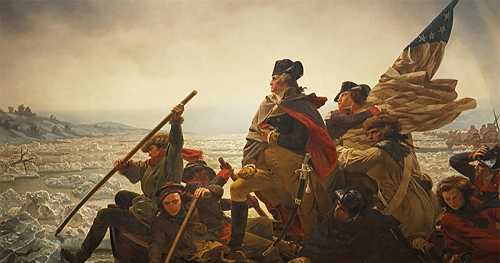 Imagine staring at the famous painting 'Washington Crossing the Delaware' and noticing something peculiar - the ice. It's everywhere, a testament to the harsh winter that played a pivotal role in one of America's most pivotal moments. But what if we told you that this same icy landscape is also a harbinger of our changing climate?
A Turning Point in History
In December 1776, General George Washington's army was on the brink of collapse after a string of losses. But with ice forming in the Delaware River, the enemy assumed it was too treacherous for the Americans to cross. Little did they know, this cold snap would become their shield, allowing Washington to launch a surprise attack that would change the course of history. 'Looking back, had the weather proven more mild, they most definitely would've encountered resistance outside Trenton,' says Alex Robb, an educator at Washington Crossing Historic Park.
A Shift in the Climate
We know that Americans were accustomed to colder winters during this time period, thanks to Thomas Jefferson's meticulous weather records. But since then, winter has undergone a significant transformation. 'Ever since Washington was here, there has been a steady increase,' says Jen Brady, a data analyst at Climate Central. Their research reveals that average winter temperatures in the Philadelphia area have risen by 5.5 degrees since 1970.
A Time Machine
To understand our changing climate, scientists turn to ice cores - long tubes of ice extracted from glaciers in Greenland and Antarctica. These cores contain perfectly preserved air bubbles that date back thousands of years. 'It's this sort of magical way of going back in time,' says Eric Steig, a glaciologist at the University of Washington. 'It's a time machine.' One such core dates back to 1776, containing tiny pockets of air from that time period.
The Carbon Connection
Those bubbles contain carbon dioxide, a gas that regulates Earth's temperature. For 800,000 years, carbon levels have fluctuated, but never above 300 parts per million - until around 1800, when they started to skyrocket. 'We began burning fossil fuels, and we're doing it really fast,' Steig explains. Since the Industrial Revolution, our cars, factories, and power plants have been emitting massive amounts of carbon dioxide, leading to warmer temperatures that intensify extreme floods, droughts, and fires.
As we gaze upon the icy Delaware, we're reminded not only of Washington's pivotal moment but also of the changing climate that has shaped our world. 'It would seem to me it's good for people to understand things have changed, and will continue to change, and have an understanding of what to expect going forward,' Steig says. As we move forward in this uncertain era, let us remember the lessons of history and the importance of preserving our planet for future generations.
Topic Live